This new, quarterly snapshot highlights the economic trends and indicators that could impact workers compensation. Designed for quick reference, it provides an easy-to-digest view of the developments we're monitoring, what they may mean for the industry, and what to keep an eye on in the months ahead.
What is NCCI watching in the economy?
1. Employment Is Rebounding
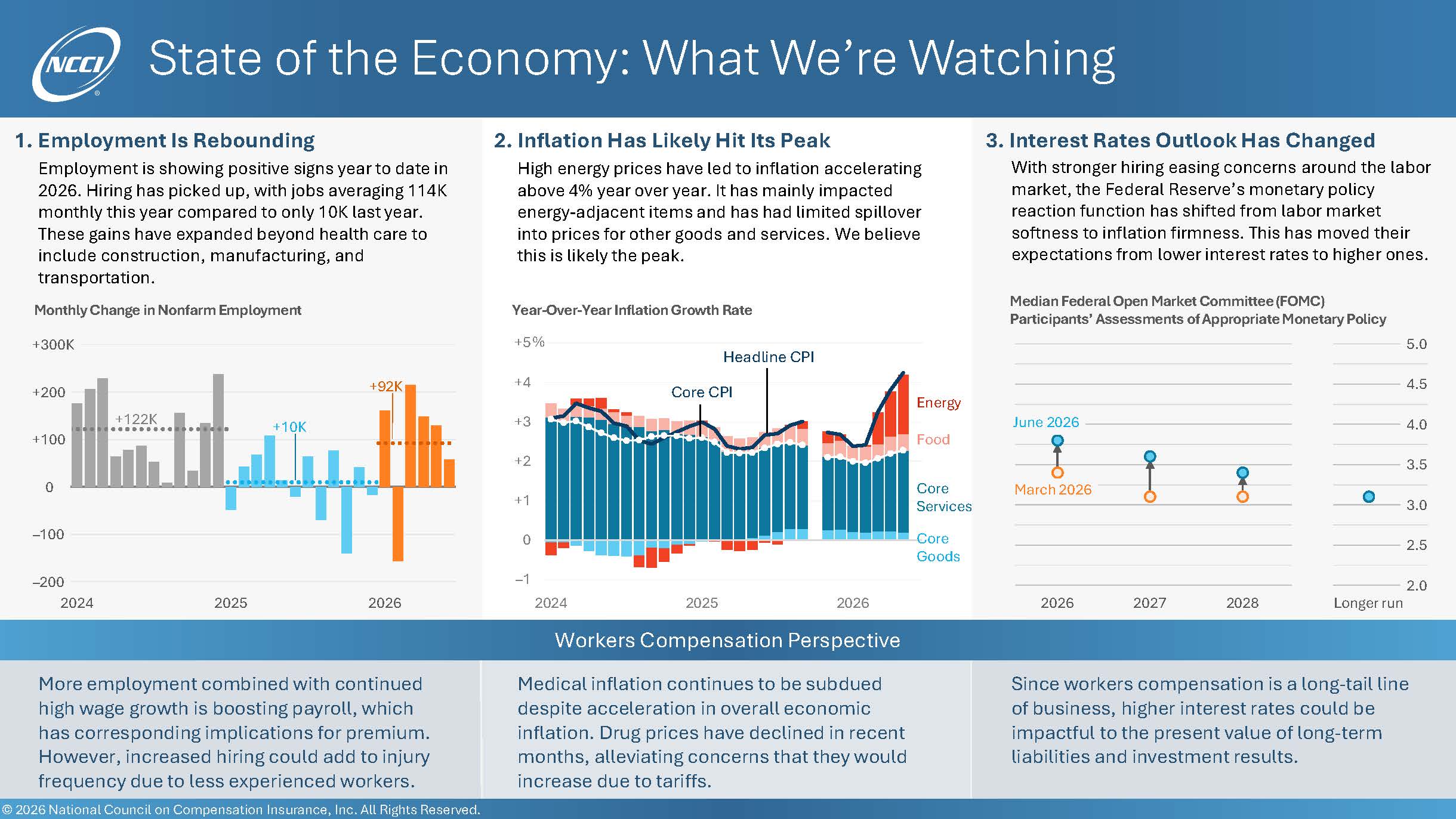
Employment is showing positive signs year to date in 2026. Hiring has picked up, with jobs averaging 92K monthly this year compared to only 10K last year. These gains have expanded beyond health care to include construction, manufacturing, and transportation.
Why it Matters:
More employment combined with continued high wage growth is boosting payroll, which has corresponding implications for premium. However, increased hiring could add to injury frequency due to less experienced workers.
2. Inflation Has Likely Hit Its Peak
High energy prices have led to inflation accelerating above 4% year over year. It has mainly impacted energy-adjacent items and has had limited spillover into prices for other goods and services. We believe this is likely the peak.
Why it Matters:
Medical inflation continues to be subdued despite acceleration in overall economic inflation. Drug prices have declined in recent months, alleviating concerns that they would increase due to tariffs.
3. Interest Rates Outlook Has Changed
With stronger hiring easing concerns around the labor market, the Federal Reserve’s monetary policy reaction function has shifted from labor market softness to inflation firmness. This has moved their expectations from lower interest rates to higher ones.
Why it Matters:
Since workers compensation is a long-tail line of business, higher interest rates could be impactful to the present value of long-term liabilities and investment results.
Click the image to access the
State of the Economy: What We're Watching snapshot.
Connect with our
Economics Team if you have questions or want to gain additional insights.
This article is provided solely as a reference tool to be used for informational purposes only. The information in this article shall not be construed or interpreted as providing legal or any other advice. Use of this article for any purpose other than as set forth herein is strictly prohibited.