This quarterly snapshot highlights the economic trends and indicators that could impact workers compensation. Designed for quick reference, it provides an easy-to-digest view of the developments we're monitoring, what they may mean for the industry, and what to keep an eye on in the months ahead.
What is NCCI watching in the economy?
Employment Growth Is in Flux
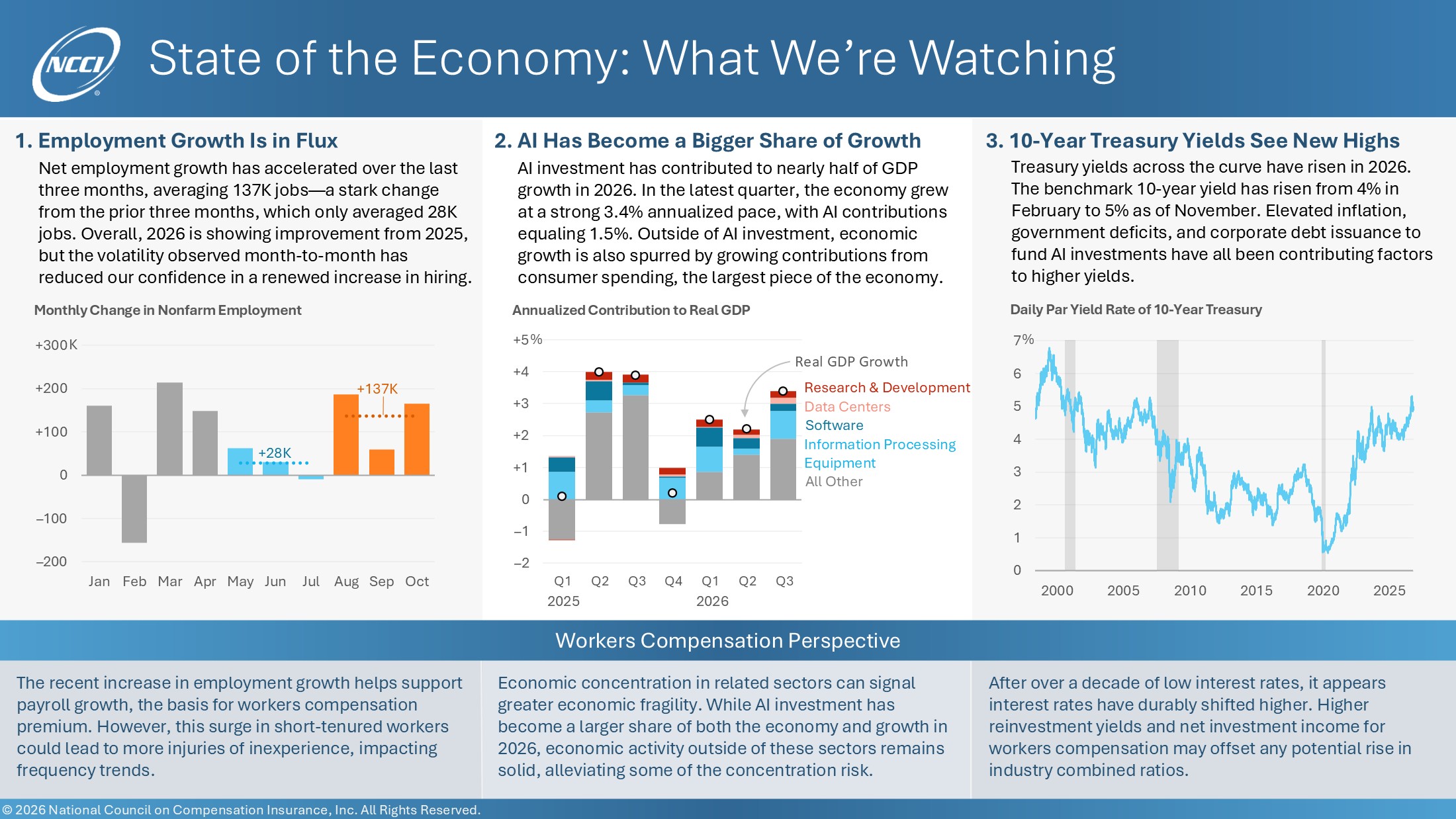
Net employment growth has accelerated over the last three months, averaging 137K jobs—a stark change from the prior three months, which only averaged 28K jobs. Overall, 2026 is showing improvement from 2025, but the volatility observed month-to-month has reduced our confidence in a renewed increase in hiring.
Why it Matters:
The recent increase in employment growth helps support payroll growth, the basis for workers compensation premium. However, this surge in short-tenured workers could lead to more injuries of inexperience, impacting frequency trends.
AI Has Become a Bigger Share of Growth
AI investment has contributed to nearly half of GDP growth in 2026. In the latest quarter, the economy grew at a strong 3.4% annualized pace, with AI contributions equaling 1.5%. Outside of AI investment, economic growth is also spurred by growing contributions from consumer spending, the largest piece of the economy.
Why it Matters:
Economic concentration in related sectors can signal greater economic fragility. While AI investment has become a larger share of both the economy and growth in 2026, economic activity outside of these sectors remains solid, alleviating some of the concentration risk.
10-Year Treasury Yields See New Highs
Treasury yields across the curve have risen in 2026. The benchmark 10-year yield has risen from 4% in February to 5% as of November. Elevated inflation, government deficits, and corporate debt issuance to fund AI investments have all been contributing factors to higher yields.
Why it Matters:
After over a decade of low interest rates, it appears interest rates have durably shifted higher. Higher reinvestment yields and net investment income for workers compensation may offset any potential rise in industry combined ratios.
Click the image to access the
State of the Economy: What We're Watching snapshot.
Connect with our
Economics Team if you have questions or want to gain additional insights.
This article is provided solely as a reference tool to be used for informational purposes only. The information in this article shall not be construed or interpreted as providing legal or any other advice. Use of this article for any purpose other than as set forth herein is strictly prohibited.