The terrorism peril presents a unique set of considerations to the property and casualty insurance sector, which may be impactful to the health and stability of the workers compensation line of insurance. A challenge for writers of workers compensation coverage is the uncertainty of the frequency and severity of terrorist events, coupled with the inability to exclude any specific peril.
This article examines the background of insurance responses to terrorism, gives an overview of the Terrorism Risk Insurance Program (TRIP), and updates its authorization status as well as its potential impact on the workers compensation system.
Terrorism Risk Insurance Program (TRIP) Background
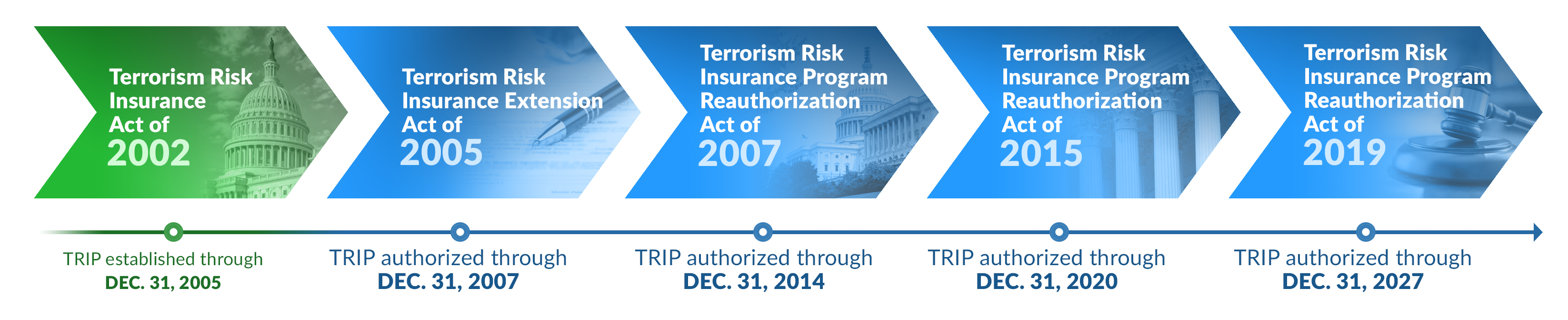
In the wake of the events of September 11, 2001, Congress enacted legislation establishing the Terrorism Risk Insurance Program (TRIP). The congressional intent of the TRIP was to create a federal backstop in the event of future terrorism events. The TRIP seeks to address market disruptions in certain lines of commercial insurance, including workers compensation, and ensure availability and affordability of terrorism coverage. Since its creation, Congress has reauthorized the TRIP four times.
Key Elements of TRIP
The TRIP is administered by the secretary of the US Department of the Treasury with assistance from the Federal Insurance Office (FIO). The program requires insurers to make terrorism coverage available for certain commercial property and casualty insurance lines, including workers compensation. The program also excludes certain lines such as health, life, and personal property insurance. For certified acts of terrorism, including those carried out by nuclear, biological, chemical, or radiological (NBCR) means, insurers pay claims to policyholders and may receive federal reimbursement for a portion of covered losses above applicable deductibles. The program also includes mechanisms for recoupment by the federal government of funds expended under the TRIP.
A terrorism loss must be certified by the secretary of the Treasury, in consultation with the attorney general and the secretary of Homeland Security. The insured losses for covered lines must reach a minimum threshold, currently $200 million, for the program to become operational (see Figure 1). An event must meet the following criteria to be certified:
- The act must be violent or dangerous to human life, property, or infrastructure
- The damage must occur within the United States or certain US-related locations abroad
- The act must be committed to coerce civilians or influence US government policy
- Certain events, including acts occurring during a declared war, are excluded from certification
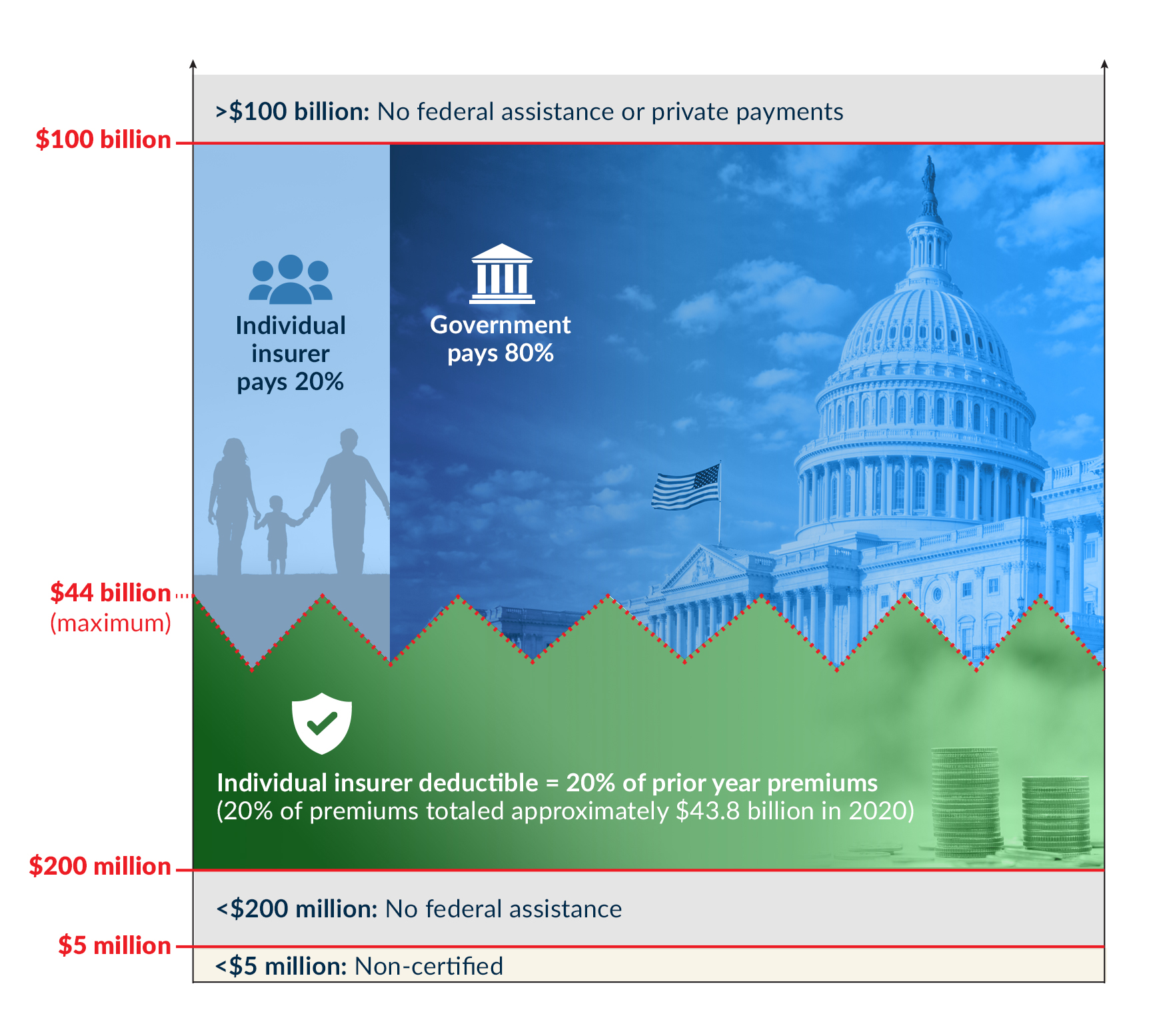
Source: Based on Congressional Research Service,
Terrorism Risk Insurance: Overview and Issue Analysis (2022), Figure 1; adapted from Congressional Budget Office,
Federal Reinsurance for Terrorism Risks: Issues in Reauthorization (2007).
TRIP Reauthorization Status
Absent congressional action, the TRIP will expire on December 31, 2027. The TRIA Program Reauthorization Act of 2026 (H.R.7128) passed the House of Representatives in June 2026. The bill extends the TRIP through 2034 and makes targeted changes to the certification process. As passed by the House, H.R. 7128 raises the minimum property casualty loss required for event certification by the secretary of the Treasury from $5 million to $10 million starting in 2029. Additionally, it requires the Department of the Treasury to give public notice not later than 30 days of its start of a review whether to certify an act as terrorism and make final determination no later than 90 days after the public notice.
In the Senate, the Terrorism Risk Insurance Program Reauthorization Act of 2026 (S. 4395), passed the full chamber in September 2026 and extends the program through 2034 without any changes to the program. The Senate-passed TRIP legislation differs from the House bill and as such, the chambers will need to find a compromise prior to sending the legislation to the president. Congress is in recess until after the November midterm elections, so the next likely opportunity for additional action on TRIP reauthorization is during the lame-duck congressional session. That session convenes in November and adjourns in mid-December.
TRIP Oversight
The FIO administers and oversees the TRIP. The Terrorism Risk Insurance Program Reauthorization Act of 2015 included provisions intended to enhance monitoring and oversight of the TRIP. Provisions in that Act require FIO to annually collect data related to the TRIP. At the direction of the Department of the Treasury, NCCI and the state workers compensation bureaus collect the required workers compensation data annually and submit it to the FIO, on behalf of the industry. That data, as well as carrier-reported data for other lines of insurance covered under the TRIP, is relied on for FIO’s annual report to Congress.
In June 2026, the FIO released its Report on the Effectiveness of the Terrorism Risk Insurance Program, which highlighted several findings, including:
- Overall Program Effectiveness: The TRIP has generally been effective in achieving the core statutory goals established by the Terrorism Risk Insurance Act (TRIA).
- Availability and Affordability: Terrorism risk insurance remains generally available and affordable, a stability stakeholders attribute directly to TRIP’s backstop role. Places of worship exhibit higher take-up rates than other industry sectors, though they pay a higher percentage of their total policy premiums for terrorism coverage.
- High Coverage Rates Despite Minor Declines: Although there has been a slight decline in take-up rates and extended policy limits, a substantial majority of commercial P&C policies still contain terrorism coverage, priced at a low and consistent percentage of overall premiums.
- No Impairment to Commercial Markets: Neither treasury nor industry stakeholders identified any aspects of TRIP that discourage or impede insurers from providing commercial property/casualty insurance or terrorism risk coverage.
- Crucial Role in Workers Compensation: TRIP serves as a vital backstop for workers compensation insurers because state laws mandate that workers compensation policies cover terrorism without liability limits or exclusions for extreme aggregate risks.
NCCI’s Role in Responding to TRIP Changes
Under the current program, carriers are required to disclose to policyholders that terrorism losses may be partially reimbursed by the federal government. This is done through policy endorsements. Dependent on the nature and scope of changes or expiration of the TRIP, NCCI will make rate and form filings as needed to ensure the workers compensation rating methodology and infrastructure respond appropriately. These filings will include revision, withdrawal, establishment of appropriate rates, rules, and/or endorsements as determined by statutory changes to the program. Once congressional action becomes clear, NCCI will make the necessary filings with the state insurance regulators who then review those filings for approval.
In June 2026, NCCI filed Item P-1420—Establishment of Notification Endorsement of Pending Law Change to Terrorism Risk Insurance Program Reauthorization Act of 2019 (TRIPRA) in most NCCI states. This endorsement notifies policyholders of the impending expiration of TRIPRA and that TRIPRA may be extended in the same form or some other form. As of August 2026, most jurisdictions have approved this endorsement.
Any filing(s) NCCI makes will go through the normal notification process on
ncci.com and announcement circulars will alert stakeholders that filing(s) have been made. The
Status of Item Filings circular will provide weekly updates on filing approvals once they are submitted to regulators.
TRIP History
Congress created the TRIP’s temporary public-private framework to restore capacity and give commercial policyholders access to coverage. Another factor in creating the TRIP was to address concerns financial institutions and commercial builders had about the lack of adequate coverage and the potential economic impacts the peril presented. Congress has reauthorized the TRIP four times as shown in Figure 2.
TRIP Resources
For additional information and updates on the TRIP, access
NCCI’s Terrorism Risk Insurance Program Resource Center.
This article is provided solely as a reference tool to be used for informational purposes only. The information in this article shall not be construed or interpreted as providing legal or any other advice. Use of this article for any purpose other than as set forth herein is strictly prohibited.